
Editor Summary
Enterprise Data Management and Governance is a 30-slide PowerPoint framework developed by Affinity Consulting Partners that aligns data management practices with business objectives and governance.
Read moreIncludes deliverables and templates: data governance framework template, data quality assessment checklist, master data management plan, data architecture blueprint, data security policy template, and an implementation roadmap. Target users include Data Governance Officers, CIOs, Data Architects/Engineers, Compliance Officers, and Business Analysts. Used for building governance frameworks, integrating disparate data sources, preparing for audits, and training teams. Sold as a digital download on Flevy with immediate digital download.
This deck is designed for situations where an organization must formalize data governance, integrate disparate sources, prepare for compliance audits, or improve data quality and security amid growing data volumes.
Data Governance Officers defining roles, policies, and a RACI model using the data governance framework template.
CIOs aligning IT strategy and architecture to business objectives with the data architecture blueprint.
Data Architects and Engineers designing master data management and integration flows using the master data management plan.
Compliance Officers preparing audit artifacts and updating policies with the data security policy template.
The approach sequences framework definition, maturity assessment, and an implementation roadmap consistent with standard consulting governance rollouts.
Unleashing the Potential of Enterprise Data Management: Navigating the Data Deluge
In today's fast-paced digital landscape, enterprises are witnessing an unprecedented surge in data generation year after year. As reported by Grand View Research, the data management solutions market attained a substantial valuation of USD 82.25 billion in 2021, with an impressive compound annual growth rate (CAGR) projected at approximately 14.0% until 2030. This remarkable expansion of data volume presents a formidable challenge for organizations – namely, the effective harnessing of potential within this vast reservoir of information.
At the heart of corporate prosperity lies data, which stands as an organization's most critical and valuable asset. Paradoxically, the degree of neglect exhibited by numerous companies regarding the management and governance of this precious resource is worrisome. The absence of recognition for best practices in this domain has given rise to a host of uncertainties, including the optimal extraction of value from data and apprehension concerning its reliability and potential vulnerability. Consequently, organizations struggle to maximize the untapped opportunities concealed within these datasets. Ovum, a reputable technology research firm, has highlighted the exorbitant annual cost of over $700 billion for US organizations due to poor data management and governance.
To confront this monumental challenge head-on, the emergence of Enterprise Data Management Solutions has offered potential solutions. This comprehensive deck provides an insightful overview of essential business processes and capabilities necessary for organizations to flourish amid the overwhelming deluge of data. By adopting these principles, enterprises can effectively identify process and technology requirements, thereby mitigating data quality challenges and elevating their data management practices.
It is essential to acknowledge that the success of data management transcends mere technological advancements, demanding the infusion of human guidance and maturation of business processes. Countless enterprises have experienced disappointment when their technological investments fail to deliver expected outcomes, primarily due to an absence of a holistic approach to data management.
However, this offering is far from being another insubstantial presentation of lofty promises. Instead, the presentation embarks on a transformative journey, presenting frameworks, industry examples, and a comprehensive roadmap to cultivate an in-house data management capability that epitomizes excellence.
The overarching objective is to empower organizations to consistently and proficiently manage data across the enterprise. By unlocking the secrets to data management success, enterprises will gain newfound confidence in harnessing the true potential of their data resources.
The present is an opportune moment to assume command over the data destiny of enterprises. The invitation extends to all those who seek to unveil the secrets to mastering the data-driven future. Together, enterprises shall navigate the complexities, seize opportunities, and transform their organizations into data powerhouses.
This presentation emphasizes the importance of addressing all six components of the data management framework to maximize benefits. It also outlines various governance structures and key areas, including operating workflows, policies, and standards.
Got a question about the product? Email us at support@flevy.com or ask the author directly by using the "Ask the Author a Question" form. If you cannot view the preview above this document description, go here to view the large preview instead.
MARCUS OVERVIEW
This synopsis was written by Marcus [?] based on the analysis of the full 30-slide presentation.
Executive Summary
The "Enterprise Data Management and Governance" presentation offers a consulting-grade framework that aligns data management practices with business objectives, ensuring robust governance and quality across data assets. This resource is designed to help organizations navigate the complexities of data integration, privacy, and quality management. By leveraging this framework, executives can establish a comprehensive data governance strategy, enhance data quality, and drive informed decision-making across the enterprise.
Who This Is For and When to Use
• Data Governance Officers responsible for overseeing data management practices
• Chief Information Officers (CIOs) aiming to align IT strategy with business goals
• Data Architects and Engineers tasked with designing data structures and models
• Compliance Officers ensuring adherence to data privacy regulations
• Business Analysts focused on leveraging data for strategic insights
Best-fit moments to use this deck:
• During the development of a data governance framework
• When integrating disparate data sources into a unified system
• In preparation for audits or compliance reviews related to data management
• To train teams on data quality standards and governance policies
Learning Objectives
• Define the core principles of data governance and its importance in enterprise settings
• Build a comprehensive data management framework that addresses governance, quality, and security
• Establish clear roles and responsibilities for data stewardship across the organization
• Implement data quality metrics and standards to ensure accuracy and completeness
• Align data management practices with overall business strategy and objectives
• Create a roadmap for continuous improvement in data governance capabilities
Table of Contents
• Introduction to Data Management and Governance (page 2)
• Key Challenges in Data Management (page 3)
• Framework Components (page 4)
• Data Governance Structure (page 6)
• Levels of Data Management Maturity (page 5)
• Data Quality Assessment (page 18)
• Data Security Standards (page 25)
• Implementation Roadmap (page 27)
Primary Topics Covered
• Data Governance - The framework for establishing policies, roles, and processes to manage corporate data effectively.
• Data Quality - Standards and practices to ensure data accuracy, completeness, and reliability for decision-making.
• Data Architecture - The design and structure of data systems that support business processes and data management.
• Master Data Management - Strategies for managing critical data entities to ensure consistency across the organization.
• Data Security - Policies and technologies to protect data privacy and ensure compliance with regulations.
• Data Integration - Techniques for combining data from disparate sources to provide a unified view for analysis.
Deliverables, Templates, and Tools
• Data governance framework template outlining roles, responsibilities, and workflows
• Data quality assessment checklist to evaluate data integrity and compliance
• Master data management plan for defining and managing critical data entities
• Data architecture blueprint for visualizing data flow and storage solutions
• Data security policy template to guide compliance with data protection regulations
• Implementation roadmap for executing data governance initiatives
Slide Highlights
• Overview of key challenges organizations face in managing enterprise data
• Framework components detailing the intersection of people, process, and technology
• Levels of data management maturity illustrating the evolution from foundational to pioneering practices
• RACI model outlining roles and responsibilities within the data governance structure
• Data quality metrics and assessment strategies to ensure ongoing data integrity
Potential Workshop Agenda
Data Governance Framework Development (90 minutes)
• Review current data governance practices and identify gaps
• Define roles and responsibilities for data stewardship
• Establish key policies and standards for data management
Data Quality Improvement Session (60 minutes)
• Assess current data quality metrics and reporting frameworks
• Identify areas for improvement and develop action plans
• Create a communication strategy for data quality initiatives
Data Security Compliance Workshop (90 minutes)
• Review existing data security policies and compliance requirements
• Identify risks and mitigation strategies for data protection
• Develop a roadmap for enhancing data security measures
Customization Guidance
• Tailor the data governance framework to align with specific organizational structures and business needs
• Update data quality metrics and standards based on industry best practices and regulatory requirements
• Modify the implementation roadmap to reflect organizational priorities and resource availability
• Adjust data security policies to comply with local, national, and international laws relevant to the organization
Secondary Topics Covered
• Data lifecycle management and its impact on data governance
• The role of data stewards in maintaining data quality and compliance
• Strategies for effective data integration across systems
• The importance of stakeholder engagement in data governance initiatives
• Trends in data management technology and their implications for governance
Topic FAQ
What are the common components of a corporate data governance framework?
A corporate data governance framework typically includes defined roles and responsibilities (including data stewards), established policies and standards, metrics for effectiveness, technology enablers, and operating workflows; practical implementations often use a RACI model to clarify accountability and responsibilities, as reflected in the RACI model.
How do organizations assess their data management maturity?
Organizations assess maturity by comparing current practices against defined maturity levels, identifying gaps in people, process, and technology, and creating action plans for improvement; the presentation maps this process under its Levels of Data Management Maturity and gap-identification guidance, noting levels of data management maturity.
What metrics should I use to measure enterprise data quality?
Core data quality dimensions to measure include accuracy, completeness, and reliability; these are typically assessed via profiling, cleansing, and monitoring processes and recorded in a checklist or reporting framework, such as a data quality assessment checklist.
Why is a RACI model used in data governance programs?
A RACI model clarifies who is Responsible, Accountable, Consulted, and Informed for data-related activities, reducing ambiguity between business and IT teams and supporting stewardship and ownership assignments; the toolkit explicitly includes a RACI model to define governance roles and responsibilities in the data governance structure.
What should I look for when selecting a PowerPoint toolkit to develop data governance?
Look for practical templates and tools you can adapt: a data governance framework template, data quality assessment checklist, master data management plan, data architecture blueprint, data security policy template, and an implementation roadmap, as compiled in Flevy's Enterprise Data Management and Governance.
How much workshop time should I plan when using a governance toolkit to get started?
The deck provides sample workshop agendas that suggest short, focused sessions: a 90-minute Data Governance Framework Development, a 60-minute Data Quality Improvement session, and a 90-minute Data Security Compliance Workshop to review practices and define initial actions, totaling example session lengths of 90 and 60 minutes.
I need to integrate disparate data sources across the enterprise—what framework elements should I prioritize?
Prioritize data architecture and integration design, master data management to ensure consistent critical entities, data quality assessment to validate source data, and implementation sequencing to govern the integration effort; the product highlights data integration, a data architecture blueprint, and a master data management plan.
How can my organization prepare for a data management compliance audit?
Prepare by documenting governance policies and roles, conducting a data quality assessment, reviewing security controls, and producing formal policies and workflows; the deck includes a data security policy template and guidance for audits and compliance reviews as concrete deliverables.
Document FAQ
These are questions addressed within this presentation.
What is data governance?
Data governance is the framework that establishes policies, roles, and processes for managing corporate data effectively, ensuring its quality, security, and compliance.
Why is data quality important?
Data quality is crucial because accurate and complete data supports informed decision-making, enhances operational efficiency, and ensures compliance with regulations.
How can organizations assess their data management maturity?
Organizations can assess their data management maturity by evaluating their current practices against established levels of maturity, identifying gaps, and developing action plans for improvement.
What are the key components of a data governance framework?
Key components include defined roles and responsibilities, established policies and standards, metrics for measuring effectiveness, and technology enablers for data management.
How can data security be ensured?
Data security can be ensured through comprehensive policies, regular audits, employee training, and the implementation of technology solutions that protect data privacy.
What role do data stewards play?
Data stewards are responsible for overseeing data quality, ensuring compliance with governance policies, and acting as liaisons between business units and data management teams.
How can organizations improve data integration?
Organizations can improve data integration by adopting standardized processes, utilizing data integration tools, and ensuring clear communication across departments.
What challenges do organizations face in data management?
Common challenges include data silos, lack of governance, insufficient data quality, and difficulties in aligning data management with business objectives.
Glossary
• Data Governance - The framework for managing data assets, including policies and procedures.
• Data Quality - The measure of data's accuracy, completeness, and reliability.
• Master Data Management - The discipline of managing critical data entities consistently across the organization.
• Data Architecture - The design and structure of data systems and how they interact.
• Data Integration - The process of combining data from different sources into a unified view.
• Data Steward - An individual responsible for managing and ensuring the quality of data.
• Data Security - Measures taken to protect data from unauthorized access and breaches.
• RACI Model - A tool used to define roles and responsibilities within a project or process.
• Data Lifecycle - The stages data goes through from creation to retirement.
• Compliance - Adherence to laws, regulations, and internal policies regarding data management.
• Data Policies - Guidelines that govern data management practices within an organization.
• Data Standards - Established norms for data formats, definitions, and quality measures.
• Data Profiling - The process of analyzing data to understand its structure, content, and quality.
• ETL Tools - Software used for Extracting, Transforming, and Loading data between systems.
• Metadata - Data that provides information about other data, such as definitions and context.
• Data Cleansing - The process of correcting or removing inaccurate data.
• Data Retention - Policies governing how long data should be stored and when it should be deleted.
• Data Taxonomy - A classification system for organizing data into categories.
• Data Workflow - The sequence of processes through which data is managed and utilized.
• Data Auditing - The process of reviewing and verifying data quality and compliance.
• Data Ownership - The designation of responsibility for data management and governance.
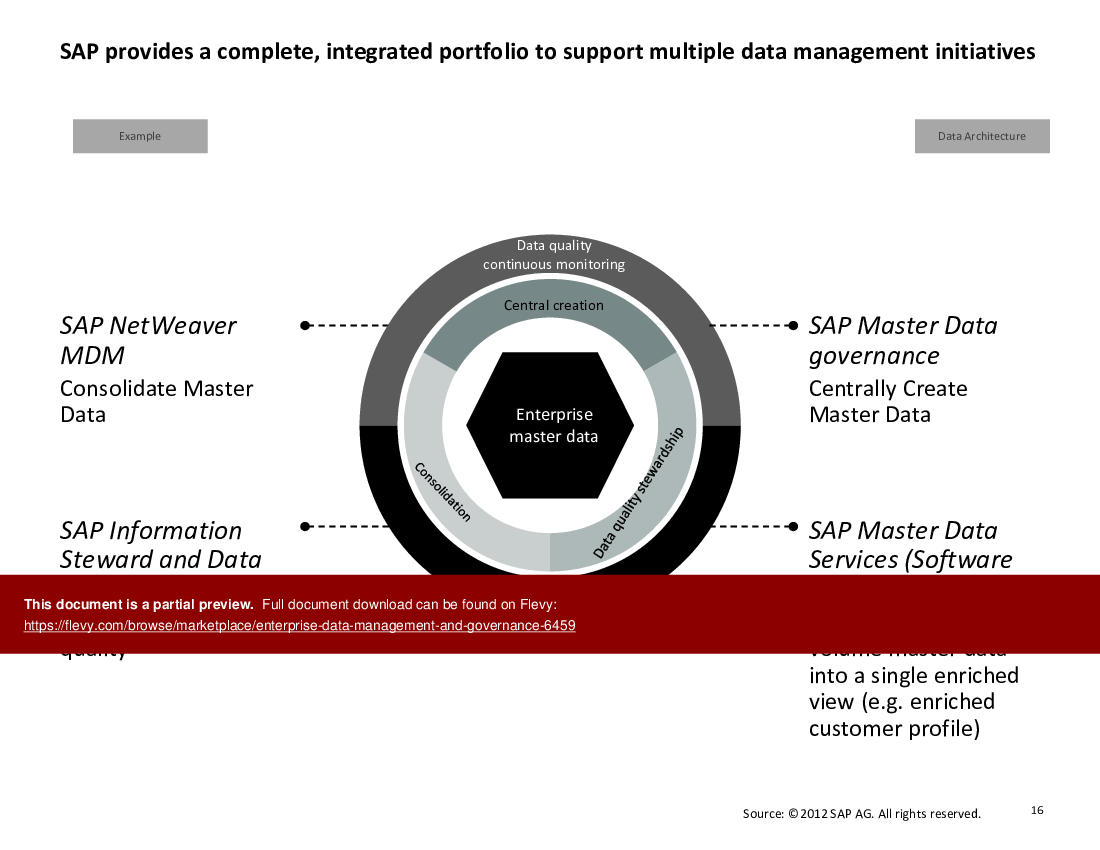
SAP's slide outlines a comprehensive portfolio for data management, centering on "Enterprise Master Data" as the core element. A unified source of master data is essential for effective data governance. Key components include data quality continuous monitoring, central creation, consolidation, and high-velocity integration, which ensure master data is accurate and accessible. Specific SAP solutions are highlighted: "SAP NetWeaver MDM" for consolidating master data, "SAP Information Steward and Data Services" for managing data quality, and "SAP Master Data Governance" for centralized creation. "SAP Master Data Services" targets high-volume master data consolidation into enriched views, enhancing customer insights and decision-making. This structured approach showcases how SAP's integrated solutions support organizations in achieving data management goals.
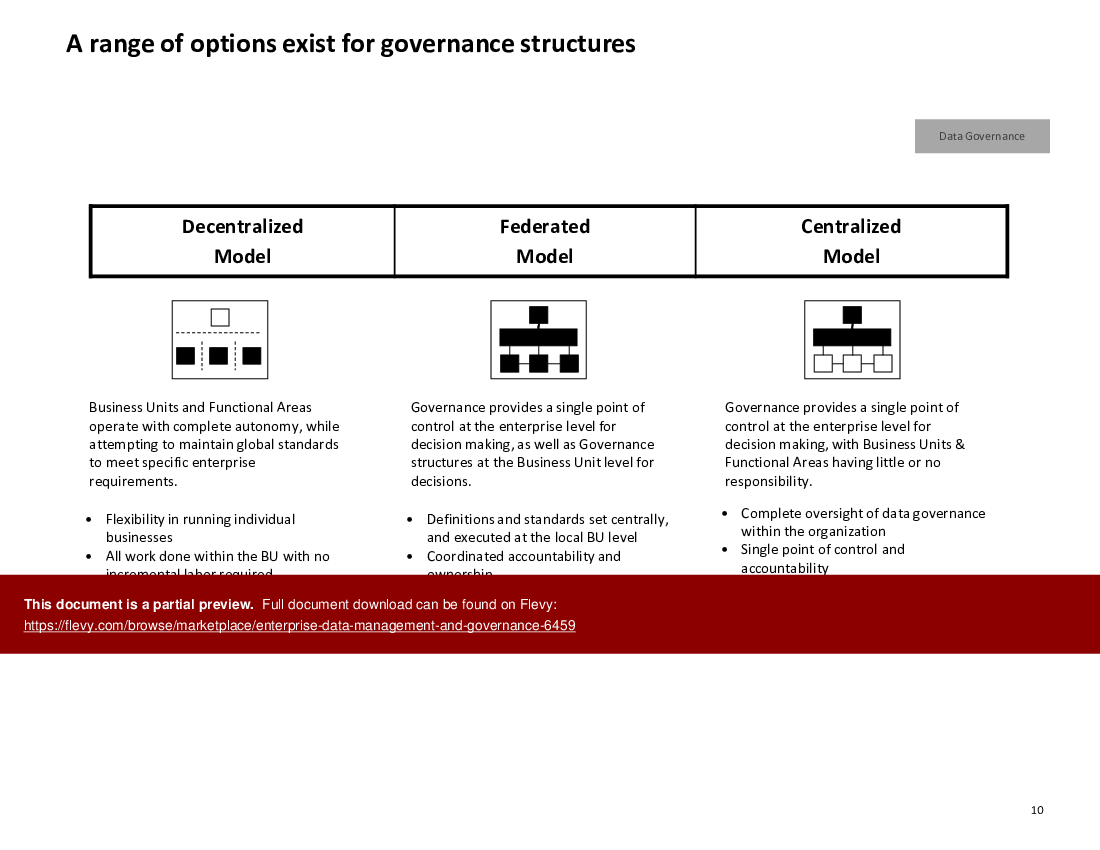
This PPT slide outlines 3 governance models: Decentralized, Federated, and Centralized. The Decentralized Model grants full autonomy to business units, promoting flexibility and rapid decision-making in response to market changes. The Federated Model combines centralized oversight with local execution, allowing for coordinated accountability and representation from business units. The Centralized Model enforces complete control over data governance, ensuring high data consistency and compliance at the expense of flexibility. Each model's strengths and weaknesses influence organizational governance structure choices based on strategic goals and operational dynamics.
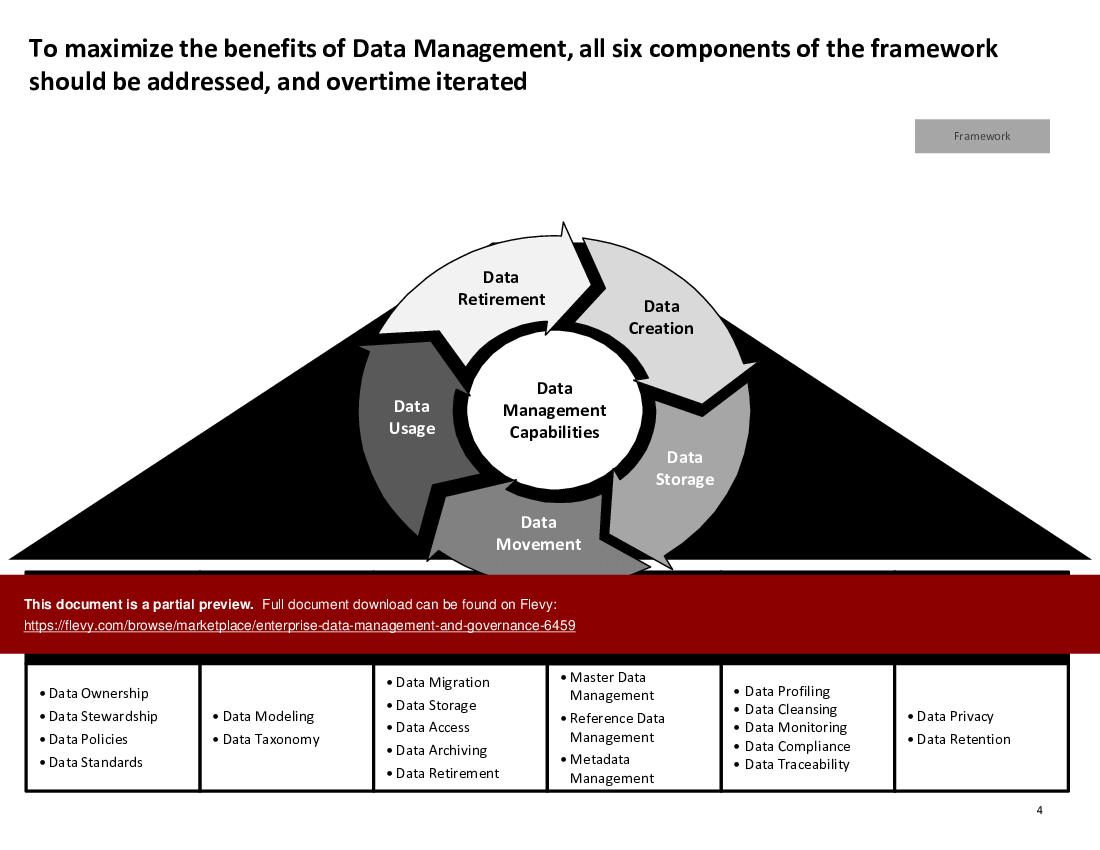
The framework for maximizing Data Management benefits centers on "Data Management Capabilities," emphasizing the iterative nature of addressing 6 key components: Data Governance, Data Structure, Data Architecture, Master Data & Metadata, Data Quality, and Data Security. Data Governance includes practices like Data Ownership and Data Stewardship for accountability in data handling. Data Structure and Data Architecture focus on Data Modeling and Data Migration to ensure data usability. Master Data & Metadata management is vital for data integrity. Data Quality practices, such as Data Profiling and Data Cleansing, ensure accuracy and reliability in decision-making. Data Security emphasizes Data Privacy and regulatory compliance, crucial in today’s data-driven landscape. This holistic approach integrates and continuously improves these components for effective data strategies.
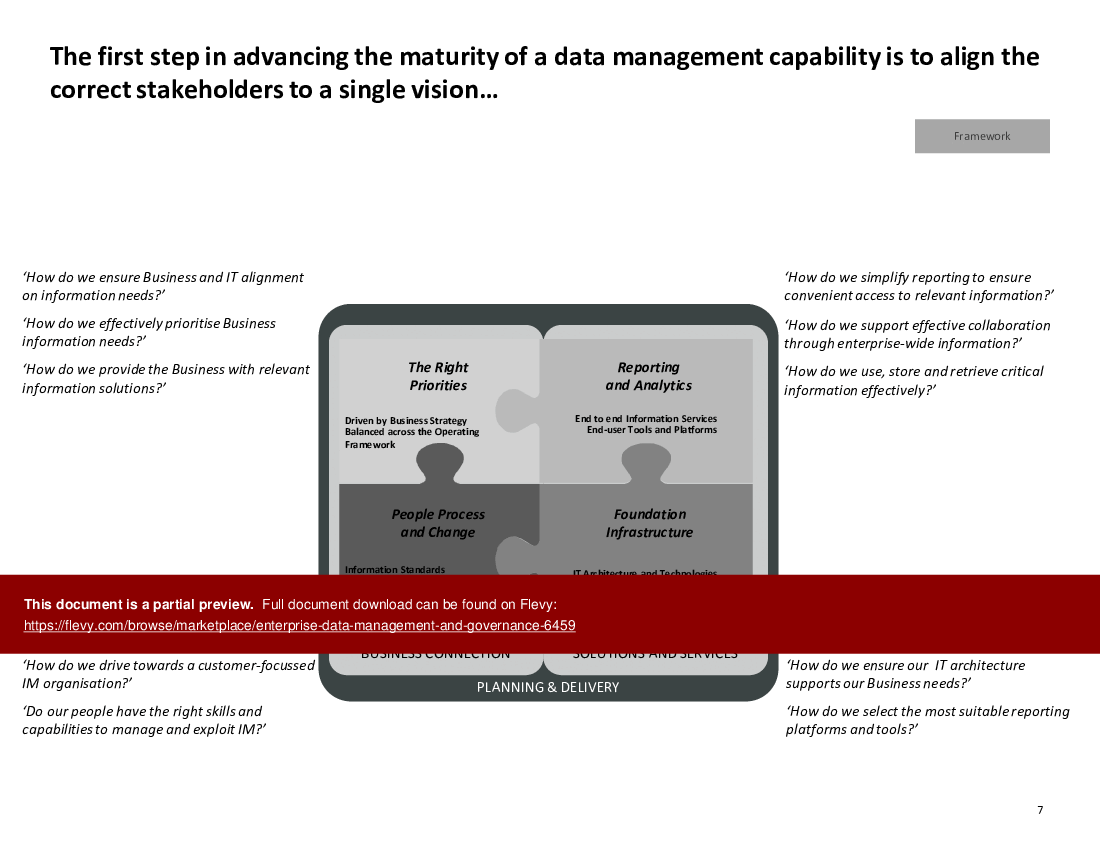
This PPT slide outlines a framework for enhancing data management capabilities through stakeholder alignment around a unified vision. Critical questions focus on business and IT alignment, prioritization of information needs, and relevant information solutions. The framework consists of 4 components: The Right Priorities, Reporting and Analytics, People Process and Change, and Foundation Infrastructure. The Right Priorities emphasizes alignment with business strategy and balancing across the operating framework. Reporting and Analytics highlight the need for end-to-end information services and user-friendly tools for informed decision-making. People Process and Change stress establishing information standards and effective communication. Foundation Infrastructure addresses IT architecture and master data management, underscoring the importance of a solid technological backbone for data initiatives.
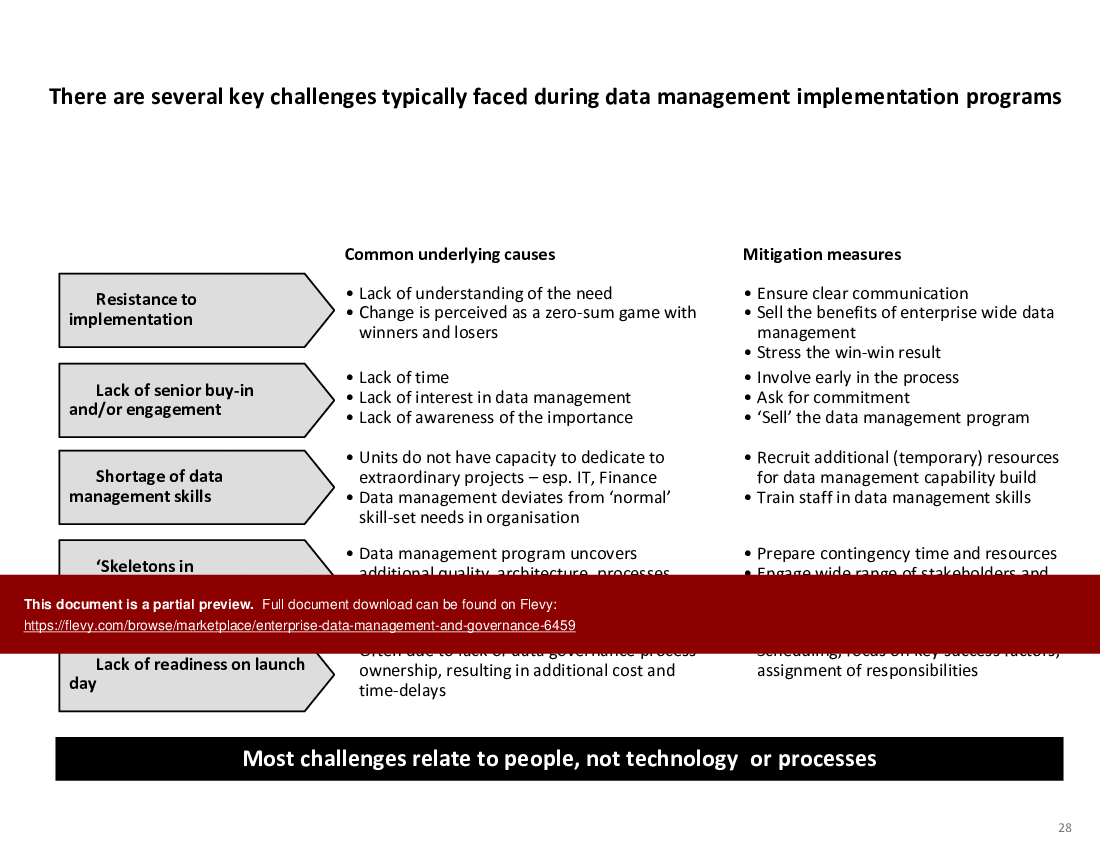
This PPT slide outlines 4 key challenges in data management implementation: resistance to implementation, lack of senior buy-in, shortage of data management skills, and launch day readiness. Resistance often arises from a lack of understanding of data management's necessity, with clear communication and emphasis on enterprise-wide benefits helping to alleviate concerns. Senior buy-in is hindered by time constraints and disinterest; early involvement of leaders can enhance engagement. A shortage of data management skills is prevalent, particularly in IT and finance, which can be mitigated by recruiting temporary resources and training staff. Finally, 'skeletons in the closet' refer to hidden issues that data initiatives may uncover, leading to delays; preparing contingency plans and engaging stakeholders can help address these challenges proactively.
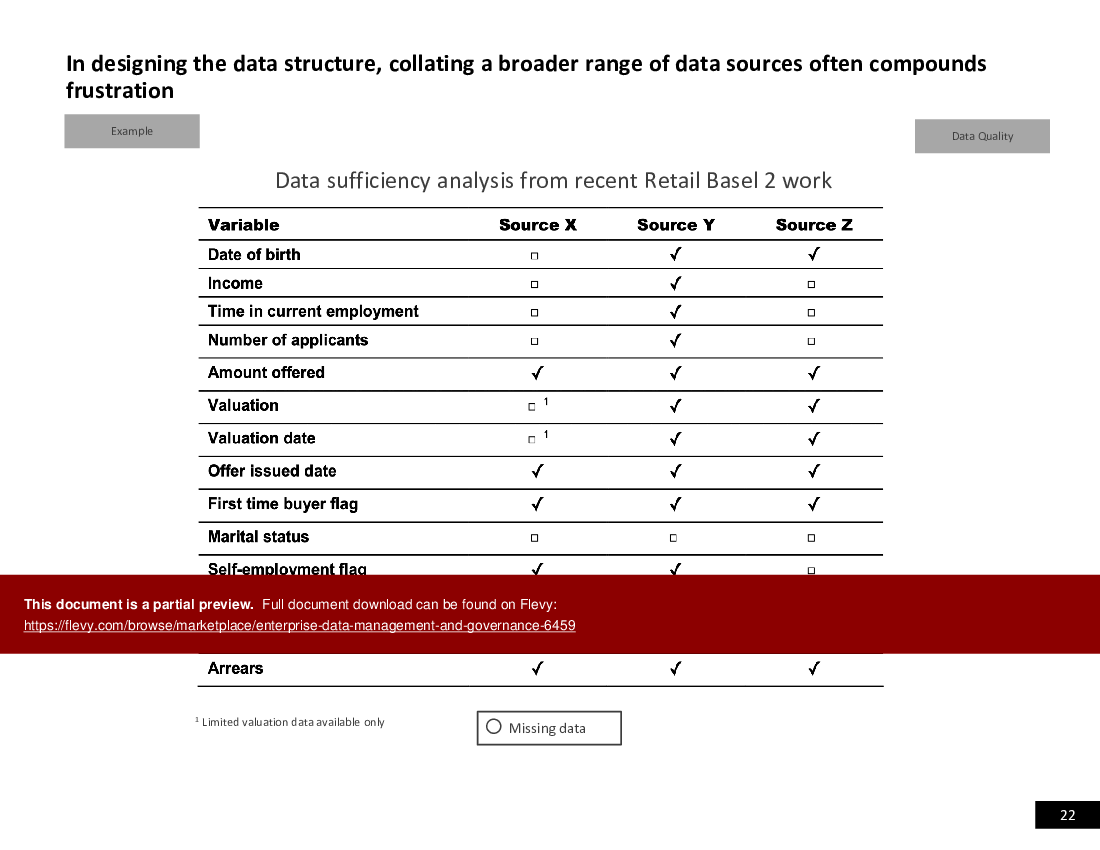
This PPT slide presents a data sufficiency analysis from Retail Basel 2, evaluating the availability of key variables across 3 data sources: Source X, Source Y, and Source Z. Key variables include personal information (date of birth, income), employment details (time in current employment, number of applicants), and financial metrics (amount offered, valuation). Discrepancies in data availability can hinder data integration and quality assurance; for example, Source Y has comprehensive income and valuation data, while Source X lacks critical variables like date of birth. Limited valuation data suggests potential gaps that could affect decision-making. Flags for first-time buyers and self-employment status enhance applicant categorization, essential for targeted marketing and risk assessment. This analysis emphasizes the need for organizations to evaluate data sources for completeness and reliability to derive meaningful insights.
This PPT slide outlines 6 critical components for effective enterprise data management and governance, categorized under Process, People, and Technology.
Data Governance establishes policies and standards for data ownership and workflow, including data policies, standards, and approval processes. Data Structure focuses on organizing data through taxonomies and logical data models, emphasizing business process flows and design standards for coherent data architecture.
Data Architecture addresses technical aspects such as data sizing, storage, movement architecture, and data retention and deletion policies. Master Data & Metadata involves defining data elements and managing reference data and metadata for data accuracy.
Data Quality establishes rules for data integrity, including data cleansing standards and compliance rules. Data Security ensures compliance with security policies and laws, protecting data from unauthorized access through security audits and access rights management.
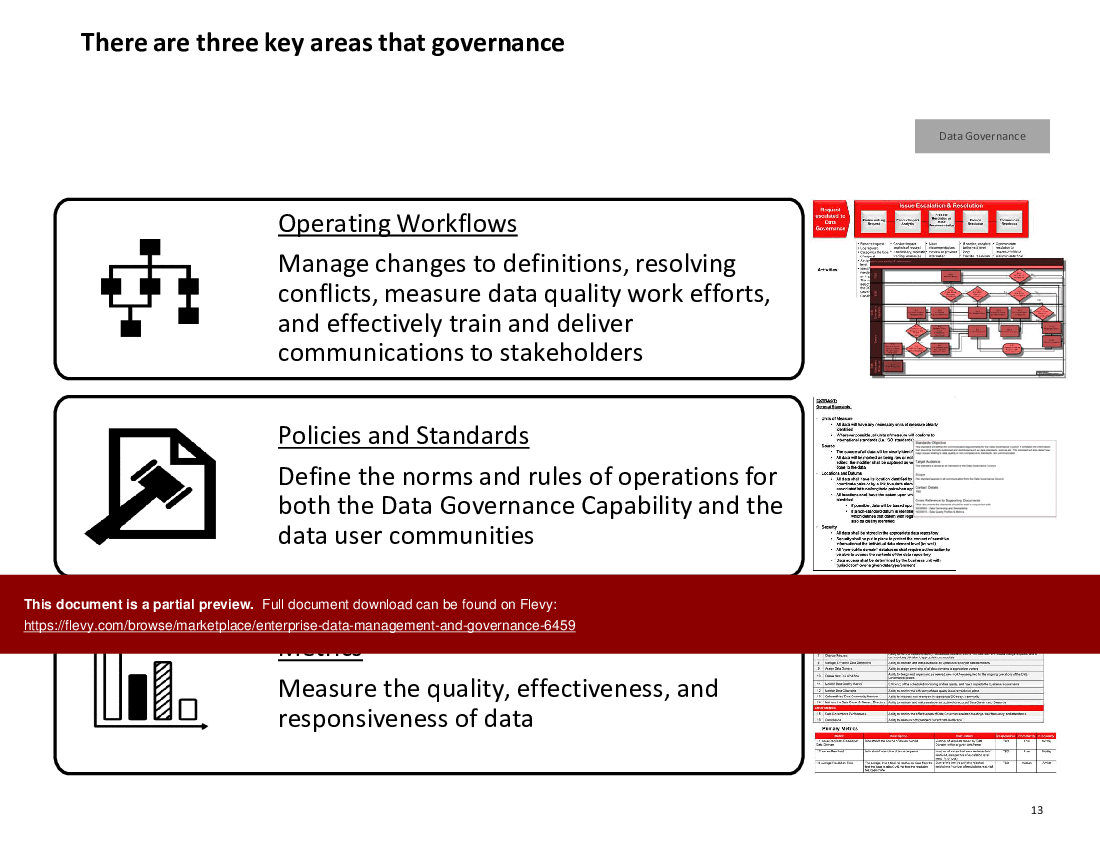
This PPT slide outlines 3 critical components of data governance: Operating Workflows, Policies and Standards, and Metrics. "Operating Workflows" focuses on managing changes to data definitions and resolving conflicts, emphasizing the need for measuring data quality and stakeholder training to maintain data integrity. "Policies and Standards" establishes norms and operational rules essential for Data Governance Capability, ensuring consistency and compliance in data management practices. "Metrics" evaluates the quality and effectiveness of data governance initiatives, serving as a feedback mechanism for continuous improvement and alignment with business objectives. A comprehensive approach to these elements is necessary for effective data management.
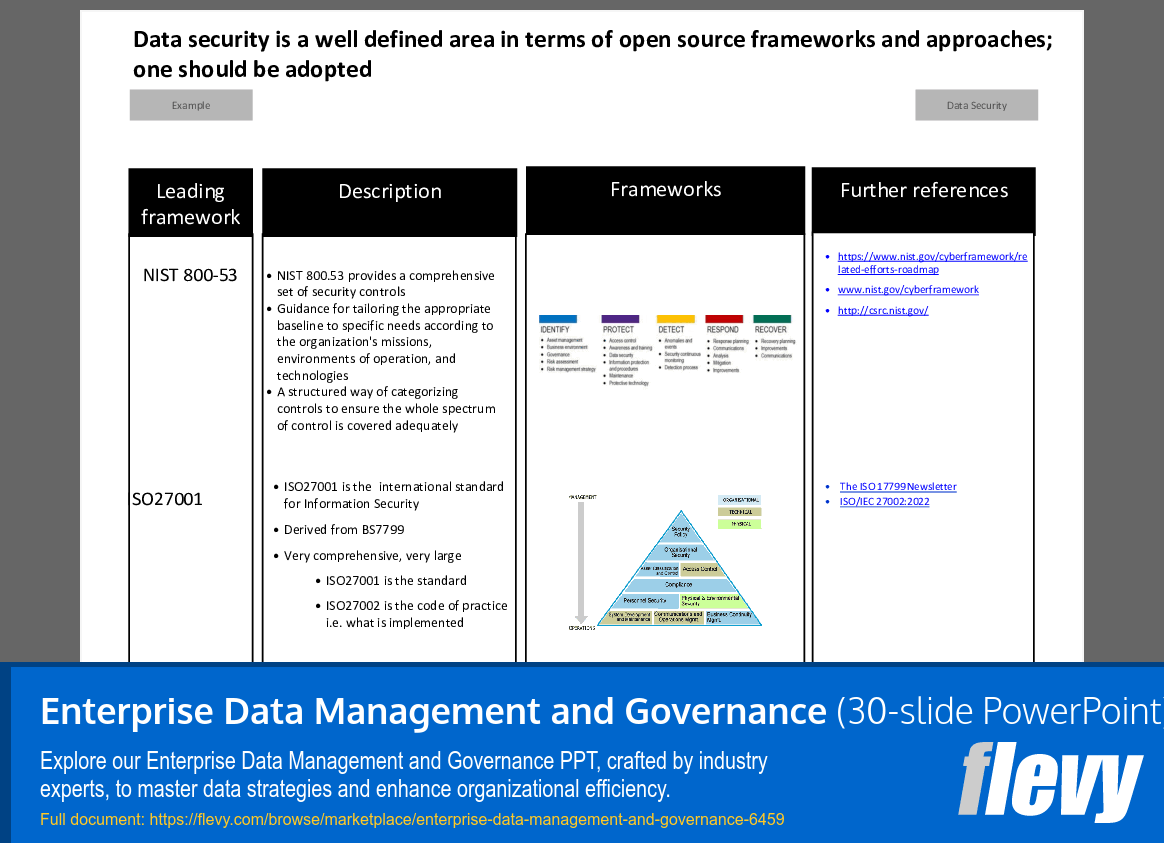
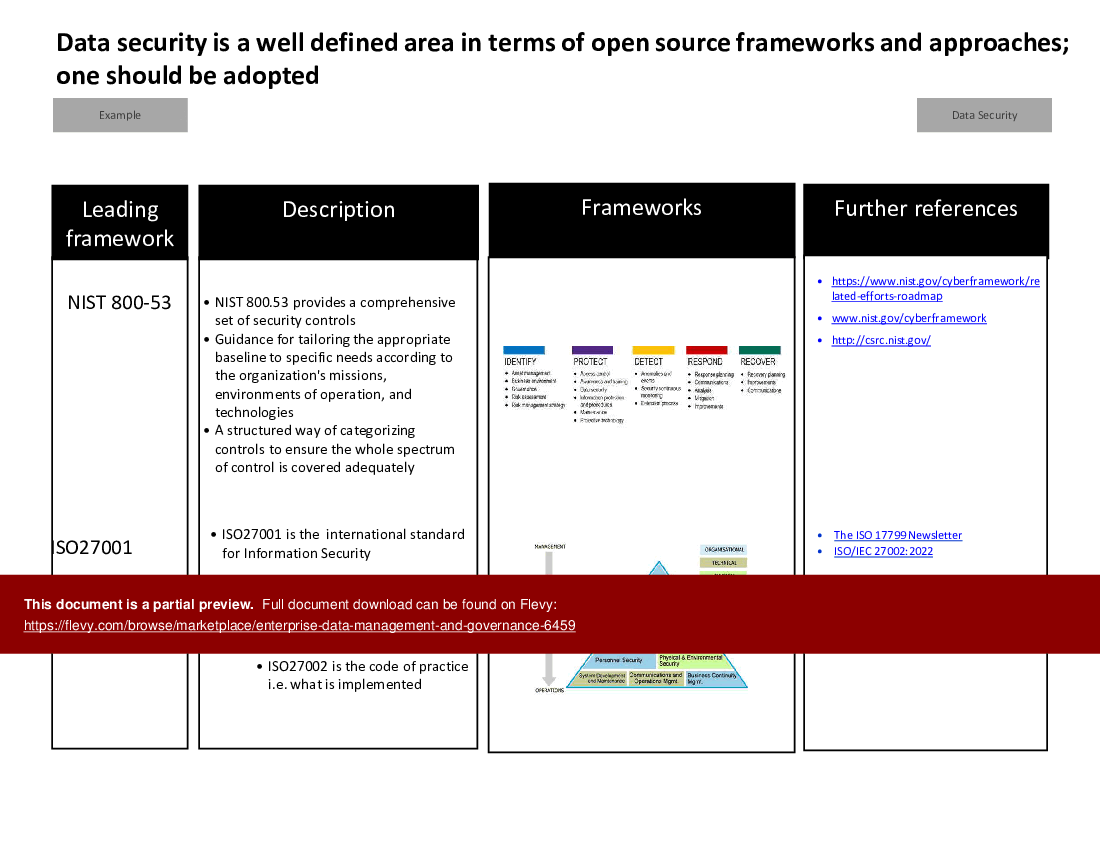
This PPT slide outlines key frameworks for data security, focusing on NIST 800-53 and ISO 27001. NIST 800-53 provides a comprehensive set of security controls tailored to organizational missions and operational environments, emphasizing structured categorization of controls. This framework aligns security practices with federal standards. ISO 27001, the international standard for information security derived from BS7799, distinguishes between itself and ISO 27002, which details implementation practices. This differentiation is essential for organizations pursuing certification and managing information security risks. The frameworks categorize the security process into 5 areas: Identify, Protect, Detect, Respond, and Recover, guiding organizations in developing a holistic security management approach.
Source: Best Practices in Data Governance, Data Management PowerPoint Slides: Enterprise Data Management and Governance PowerPoint (PPTX) Presentation Slide Deck, Affinity Consulting Partners
The Affinity Consulting Partnership is a global powerhouse of experienced consultants, specializing in technology and digital-driven change.
Our team is comprised of individuals across the globe who have extensive expertise and a proven track record in guiding large corporations across the globe through complex business transformations. Our partners were all at some stage senior consulting
... [read more] professionals at tier 1 global consulting firms over half our staff have been equity partners in the past at these firms.
With a combined experience of over 120 years, our partners bring a wealth of knowledge and insights to the table. Each member of our team has a distinguished background, having served as a top-level executive and trusted advisor to the C-suite of major corporations. Our partners have honed their skills and expertise through years of hands-on experience, leading successful consulting engagements across a wide range of industries, including finance, healthcare, retail, manufacturing, and more.
Our partners have a keen eye for identifying emerging trends and disruptions in the business landscape and are adept at developing innovative strategies to help our clients stay ahead of the curve.

As a team, we are dedicated to driving meaningful results for our clients, helping them navigate the complexities of technology and digital-driven change, and unlocking new opportunities for growth and success. Our partners are trusted advisors and thought leaders in the industry, and we are committed to providing exceptional service and creating lasting partnerships with our clients.

Since 2012, we have provided business templates to over 10,000 businesses and organizations of all sizes, from startups and small businesses to the Fortune 100, in over 130 countries.
"I am extremely grateful for the proactiveness and eagerness to help and I would gladly recommend the Flevy team if you are looking for data and toolkits to help you work through business solutions."
– Trevor Booth, Partner, Fast Forward Consulting
"I have used Flevy services for a number of years and have never, ever been disappointed. As a matter of fact, David and his team continue, time after time, to impress me with their willingness to assist and in the real sense of the word. I have concluded in fact
that it is not at all just a repository of documents/resources but, in the way that David and his team manage the firm, it is like dealing with consultants always ready to assist, advise and direct you to what you really need, and they always get it right.
I am an international hospitality accomplished senior executive who has worked and lived during the past 35 years in 23 countries in 5 continents and I can humbly say that I know what customer service is, trust me.
Aside from the great and professional service that Flevy's team provide, their wide variety of material is of utmost great quality, professionally put together and most current.
Well done Flevy, keep up the great work and I look forward to continue working with you in the future and to recommend you to a variety of colleagues around the world.
"
– Roberto Pelliccia, Senior Executive in International Hospitality
"I have used FlevyPro for several business applications. It is a great complement to working with expensive consultants. The quality and effectiveness of the tools are of the highest standards."
– Moritz Bernhoerster, Global Sourcing Director at Fortune 500
"Flevy is our 'go to' resource for management material, at an affordable cost. The Flevy library is comprehensive and the content deep, and typically provides a great foundation for us to further develop and tailor our own service offer."
– Chris McCann, Founder at Resilient.World
"FlevyPro provides business frameworks from many of the global giants in management consulting that allow you to provide best in class solutions for your clients."
– David Harris, Managing Director at Futures Strategy
"Flevy is now a part of my business routine. I visit Flevy at least 3 times each month.
Flevy has become my preferred learning source, because what it provides is practical, current, and useful in this era where the business world is being rewritten.
many challenges and there is the need to make the right decisions in a short time, with so much scattered information, we are fortunate to have Flevy. Flevy investigates, selects, and puts at our disposal the best of the best to help us be successful in our work.
"
– Omar Hernán Montes Parra, CEO at Quantum SFE
"I have found Flevy to be an amazing resource and library of useful presentations for lean sigma, change management and so many other topics. This has reduced the time I need to spend on preparing for my performance consultation. The library is easily accessible and updates are regularly provided. A wealth of great information."
– Cynthia Howard RN, PhD, Executive Coach at Ei Leadership
"As an Independent Management Consultant, I find Flevy to add great value as a source of best practices, templates and information on new trends. Flevy has matured and the quality and quantity of the library is excellent. Lastly the price charged is reasonable, creating a win-win value for
the customer, Flevy and the various authors. This is truly a service that benefits the consulting industry and associated clients. Thanks for providing this service.
"
– Jim Schoen, Principal at FRC Group
Save with Bundles
This document is available as part of the following discounted bundle(s):
Download our FREE Digital Transformation Templates
Download our free compilation of 50+ Digital Transformation slides and templates. DX concepts covered include Digital Leadership, Digital Maturity, Digital Value Chain, Customer Experience, Customer Journey, RPA, etc.